The Science, Signals, and Upsides of Work Stress
- 17 December 2025
What Job-Related Pressure Really Is and Why It Matters
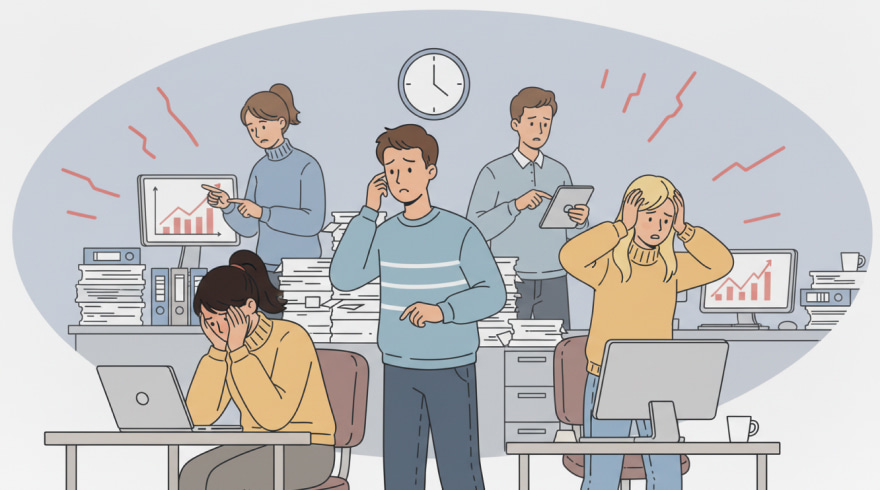
Modern work compresses time, multiplies communication channels, and continually shifts priorities, which creates an environment where attention and energy are always in demand. When people talk about pressure on the job, they’re describing a dynamic state where external demands meet internal resources such as skills, autonomy, and social support. This tension can be constructive, spurring focus and momentum, or it can be corrosive, eroding clarity, sleep, and confidence. The difference often hinges on recovery, predictability, and meaning. Teams that navigate this landscape well treat pressure as a variable to calibrate, not a badge to glorify, while individuals learn to monitor their own thresholds and adapt tactics in real time.
As a result, a careful vocabulary helps leaders and employees distinguish between productive challenge and harmful overload. In many roles, the tipping point between healthy challenge and work stress emerges when demands outpace control, stretch routines beyond recovery, and disconnect effort from purpose. This tipping point is not a character flaw; it’s a signal that the task design, expectations, and feedback loops need attention. By viewing pressure as a design problem, rather than a personal failing, organizations open the door to practical changes that protect health and unlock performance.
- Core dimensions to track: demand, control, support, role clarity, and fairness.
- Early indicators: fragmented attention, rising error rates, and irritability.
- Protective factors: predictable schedules, peer cohesion, and restorative breaks.
- Outcomes to optimize: sustainable productivity, learning velocity, and well-being.
Root Causes and Hidden Drivers You Can Actually Change
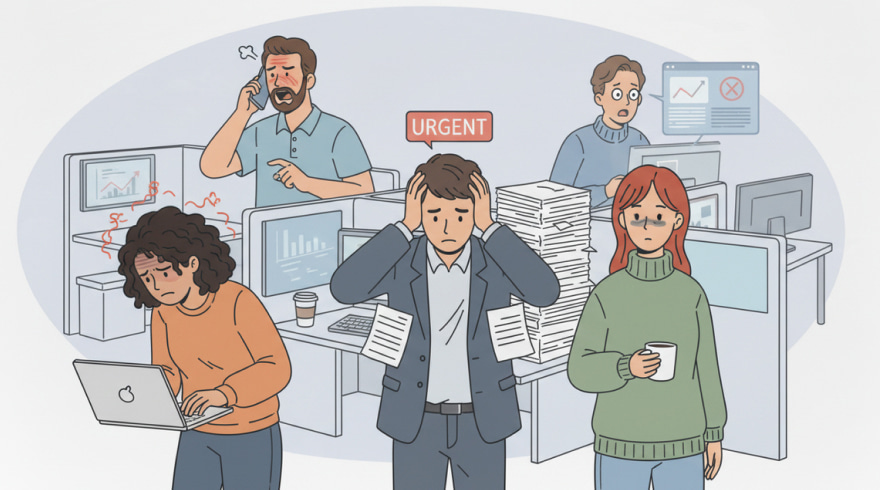
Job strain rarely springs from a single source; it accumulates through small frictions, unclear goals, and systemic bottlenecks. People can tolerate intensity when it’s bounded, but invisible rework, shifting criteria, and conflicting calendars create chronic friction. In that environment, even highly skilled professionals burn energy on coordination rather than contribution. Add in digital interruptions and you get fewer deep-work cycles, which further amplifies pressure. The remedy starts with transparency: crisp scopes, realistic timelines, and explicit trade-offs, paired with a culture that normalizes renegotiating priorities when constraints change.
Beyond immediate tasks, structural forces shape daily experience in ways that are easy to miss. Across industries, systemic factors like understaffing, irregular shifts, and ambiguous accountability intensify workplace stress for teams and managers. These forces compound when incentives reward availability over impact, or when teams lack psychological safety to flag issues early. A systems view helps reveal leverage points, like improving handoffs, automating rote steps, and strengthening feedback loops, so pressure stops cascading from one function to another.
- Common culprits: role ambiguity, meeting overload, and tool sprawl.
- Amplifiers: time-zone gaps, unmanaged dependencies, and undocumented workflows.
- Equity lens: unequal access to flexibility and support magnifies strain for caregivers and new hires.
- High-leverage fixes: simplify decisions, batch communications, and set “no-meeting” blocks.
How to Measure Pressure and Turn Signals Into Decisions
You can’t improve what you don’t measure, and the same applies to job-related pressure. Measurement should combine subjective experience with objective indicators like cycle time, incident counts, and recovery windows. Pulse surveys, 1:1 check-ins, and operational metrics form a triangulated picture, letting you match interventions to the most impactful constraints. The goal isn’t surveillance; it’s clarity, so that everyone can see patterns and act sooner. Small, repeatable metrics beat exhaustive forms that people avoid, especially when results lead to tangible changes.
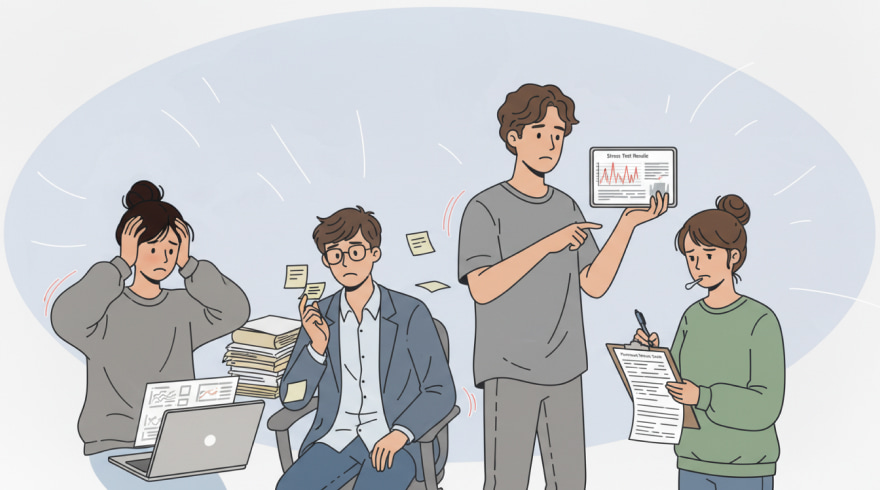
In fast-moving environments, simple instruments are surprisingly effective. For quick screening, a brief work stress test can flag load, control, and support gaps before they spike into burnout. Pair those snapshots with trend data, and you’ll see whether changes like workload smoothing or role redesign are actually working. To make interpretation easier, use a shared rubric that links common signals with first steps, so managers and employees can co-own the next action instead of waiting for a quarterly review.
| Signal | What it may indicate | First step to try |
|---|---|---|
| Frequent context switching | Too many concurrent priorities and unclear sequencing | Limit work-in-progress and set daily focus windows |
| Rising after-hours work | Unrealistic plans or hidden dependencies | Re-estimate scope and shift deadlines or reduce features |
| More mistakes and rework | Ambiguous requirements and poor handoffs | Add checklists and tighten definition of done |
| Low energy despite adequate sleep | Insufficient recovery and depleted autonomy | Rebalance task variety and add micro-breaks |
Once signals are mapped to actions, closing the loop is critical. Publish aggregated results, agree on two or three experiments, and time-box the follow-up. When people see that data drives change, participation rises and candor improves. Over time, these cycles build a shared language, so even brief check-ins yield insight and momentum.
The Surprising Benefits: From Eustress to Mastery
Not all pressure is detrimental; the right amount at the right time is rocket fuel for growth. Positive strain, what psychologists call eustress, elevates attention, sharpens memory, and nudges people into the learning zone. That’s where skills stretch just beyond comfort, supported by feedback and recovery. Athletes use this principle to periodize training, and knowledge workers can do the same by alternating deep challenges with consolidation, reflection, and rest. The upside compounds when teams celebrate process improvements, not just outcomes, because continuous learning becomes a shared habit.
Harnessing the upside requires a clear boundary between productive challenge and distress. By naming triggers and separating eustress from work stress anxiety, professionals build metacognition and self-efficacy, which protects performance during crunch periods. When people learn to tune arousal to the task, upshifting for presentations, downshifting for analysis, they unlock versatility. Leaders can help by framing stretch goals as experiments, budgeting recovery into project plans, and recognizing effort that improves systems, not just heroic sprints.
- Performance benefits: improved focus, faster feedback cycles, and stronger memory consolidation.
- Career benefits: accelerated skill acquisition, increased resilience, and visible impact.
- Team benefits: psychological safety to iterate, shared rituals for recovery, and reduced friction.
- Wellbeing benefits: greater agency, clearer boundaries, and more restorative off-hours.
Everyday Tactics to Regulate Pressure and Sustain Energy
Consistency beats intensity when it comes to self-regulation at work. Small, repeatable rituals regulate physiology and protect attention, while environment tweaks remove friction before it accumulates. Think in layers: personal routines, task design, and collaboration agreements. On the personal side, start by anchoring your day with a short planning ritual, a midday reset, and a shutdown checklist. On the task side, aim for realistic work-in-progress limits and batch communications to avoid constant switching. On the team side, protect deep-work blocks and standardize handoffs so everyone saves cognitive load.
Short bursts of movement and strategic breaths are not fluff; they recalibrate heart rate variability and attention. During the week, micro-rest protocols transform idle minutes into stress relief work that recalibrates the nervous system for the next block of focused effort. Design your environment to make the right choices easy: put water within reach, minimize visual clutter, and set clear notification rules. Over a month, these small advantages accumulate into fewer errors, steadier mood, and more predictable output.
- Physiology: 60–90 seconds of box breathing before high-stakes moments.
- Attention: 25–50 minute focus cycles bookended by brief resets.
- Boundaries: written stop-time plus a “last email” ritual to avoid spirals.
- Recovery: sunlight walks and social micro-breaks to replenish energy.
Culture, Leadership, and Systems That Lower Unnecessary Strain
Organizational architecture either amplifies or attenuates pressure, regardless of individual routines. When leaders prize clarity over speed theater, teams make better trade-offs and reduce rework. Transparent roadmaps, consistent decision rights, and documented standards prevent confusion from turning into chronic strain. Compensation and recognition systems also matter; when they reward sustainable impact rather than nonstop availability, people feel permission to prioritize health alongside output. Feedback hygiene, clear expectations, timely recognition, and constructive course correction, keeps alignment tight without emotional tax.
Measurement and dialogue need to be simple enough that people actually engage with them. On cadence, leaders should deploy a short workplace stress questionnaire to surface hotspots and track improvement without a heavy administrative burden. The resulting insights should drive small experiments: adjust staffing on high-variance workflows, create mentorship lanes, or codify calm communication norms during incidents. Culture changes when behavior changes, and behavior changes when systems make the desired action the path of least resistance.
- Clarity: publish decision logs and reduce approval layers where risk is low.
- Cadence: adopt monthly retros to prune low-value work and celebrate improvements.
- Enablement: provide training on energy management and thoughtful tooling choices.
- Equity: ensure flexibility is accessible across roles, not just to privileged teams.
FAQ: Clear Answers to Common Concerns
How can I tell if my current workload is sustainable?
Look beyond hours and track recovery quality, error frequency, and mood stability across weeks. If you’re meeting most commitments but feel increasingly brittle, that’s a sign the system is relying on short-term adrenaline rather than repeatable design. Sustainable pace shows up as steady attention, consistent sleep, and manageable variability in output.
Is it better to push through busy seasons or to renegotiate scope?
Short sprints are fine when they are planned, bounded, and followed by recovery and learning. When crunch becomes the default, errors and attrition rise. Renegotiating scope is not quitting; it’s a strategic trade-off that protects quality and team health, and it often reveals hidden bottlenecks worth fixing.
What are quick techniques to calm nerves before a big meeting?
Use a 90-second physiological reset: slow nasal exhale, relaxed shoulders, and a narrow-to-wide visual scan to reduce threat signaling. Pair that with one clear intention for the meeting and a written outline, which offloads working memory and stabilizes attention.
How should managers talk about pressure without sounding dismissive?
Start with validation, then move to specifics: clarify demands, constraints, and success criteria. Invite concrete examples, co-create next steps, and commit to follow-up. When leaders pair empathy with operational fixes, trust grows and momentum returns.
What metrics are useful for teams without sophisticated tools?
Keep it simple: track completed deep-work blocks per person, after-hours messages sent, and a weekly self-rated energy score. Review trends, run small experiments, and share what worked. Lightweight metrics beat complex dashboards that no one updates.
Latest News
-
![Understanding a Stress Assessment Questionnaire: A Complete Guide]()
- 16 December, 2025
-
![Your Guide to Evidence-Based Mood and Tension Screenings]()
- 15 December, 2025
-
![Burnout from Chronic Stress: A Comprehensive Guide and Practical Tools]()
- 12 December, 2025